Why does strategy disappear from teams after the town hall?
An article by Robert Wreschniok, CEO of the TATIN Institute for Strategy Activation
We spend months perfecting the town hall and then wonder why, three months later, the strategy has vanished from the teams.
Classic strategy roll-outs built on town halls, cascades and workshops try to change behaviour through understanding. With SPARKs, the TATIN Institute for Strategy Activation takes the opposite route: in their existing team meeting, teams regularly solve a real problem in a way that pays into a strategic goal, and experience first-hand that their own actions make a difference. First the work changes, then the mindset.
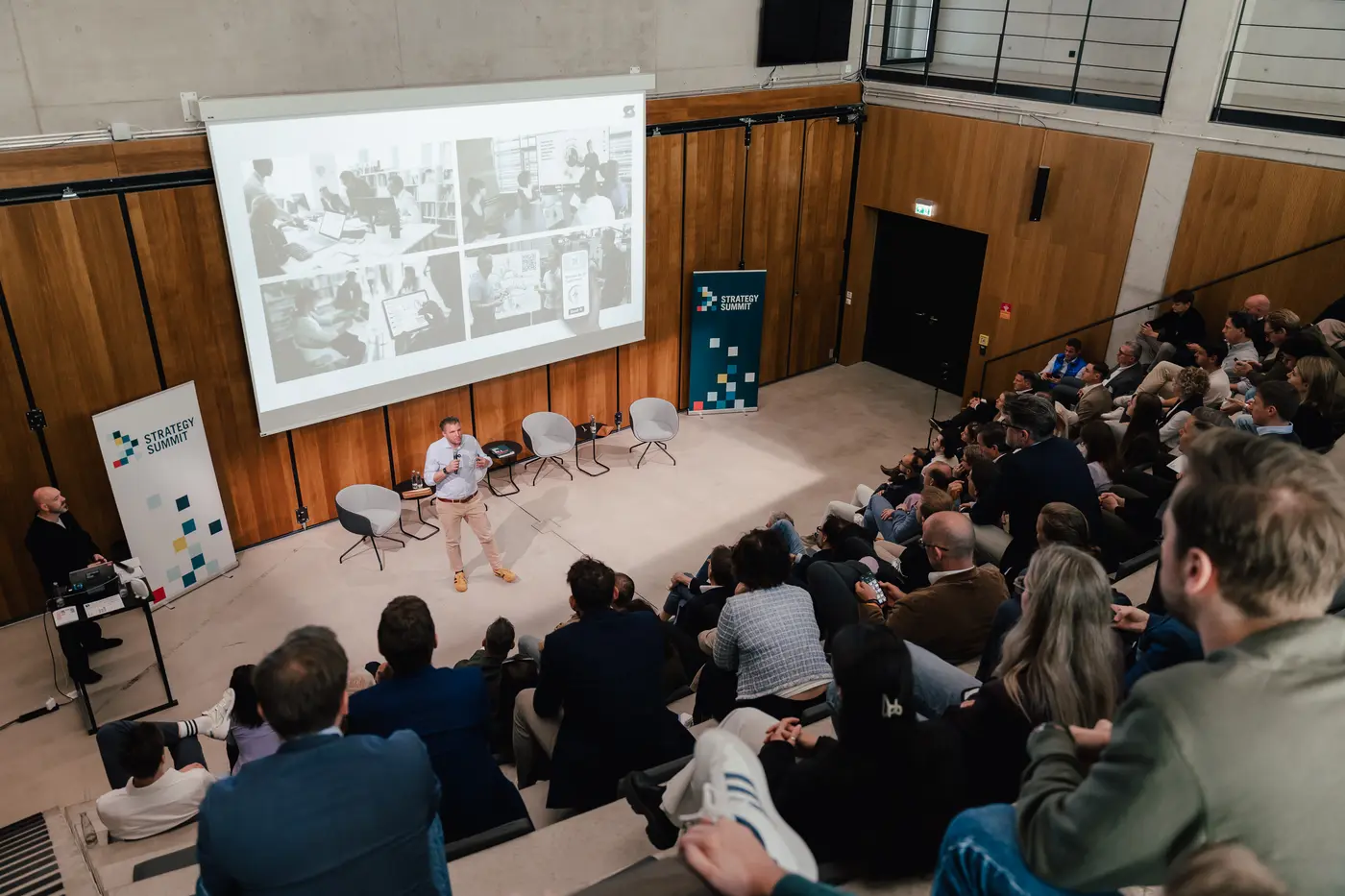
Why does strategy fizzle out after the town hall?
Not out of ill will. Whatever is on the desk today almost always beats whatever will matter at some point.
We all know the usual response: we want people to behave differently in their day-to-day work, so we take them out of their day-to-day work. Five hours of workshop on the strategy, then back to the same desk. From now on, please act strategically.
I would be lying if I claimed I had never tried this myself. For years I kept perfecting this process. Until, around seven years ago, I decided on a radical change of system.
Where does the classic approach go wrong?
The mistake lies in the approach. We try to change behaviour through understanding. It works the other way round. Experiencing even once that your own actions make a difference is a thousand times more powerful than any discussion about it.
What works instead?
So strategy has to happen where the work happens. In the regular team meeting, the team takes a real issue from its own desk and asks: how do we solve this so that it pays into our strategic goal? One small step until next time, then a joint look at what has changed. Around 20 minutes, regularly, in the existing team meeting.
That way nobody has to know the strategy by heart, because the team experiences it in its own work.
How does the methodology work in practice?
The TATIN Institute for Strategy Activation calls this routine a SPARK. A SPARK always follows the same pattern and needs neither a workshop nor an extra meeting.
- A real issue from your own deskIn the regular meeting, the team anonymously collects what is currently slowing the work down or would move it forward. No theory, just what is on the desk today.
- Align with the strategyContributions are clustered into topics and mirrored against the strategic goals. Together, the team picks the topic that will make the biggest difference right now.
- One small step with clear ownershipThe team agrees on an action within its own sphere of influence, with one person responsible and a deadline before the next session.
- Measure impact, share what worksThe impact of every action is measured. Via METIS, all teams receive recommendations on what to watch out for with a solution like this so that it works well and can be scaled.
How is this different from town halls, cascades and workshops?
- Takes place outside everyday work
- Relies on understanding and hopes for behaviour
- One-off or at long intervals
- Impact is hard to measure
- Takes place in the existing team meeting
- Relies on action and experienced impact
- Regular, around 20 minutes
- Impact is tracked in every team
Source: TATIN Impact Data. Measured via the built-in impact check and usage data from the SPARKs platform in our own client projects, without any additional survey.
How we measure
Every action a team decides on in a SPARK gets an owner and a due date. In the next SPARK the team assesses whether it was implemented and whether it worked. This impact check and the platform usage data, i.e. topics worked on, actions decided and actions implemented, are evaluated only in aggregate across at least five leaders. The figures come from our own client projects and are not an independent benchmark.
Frequently asked questions
- Why are town halls and strategy workshops not enough?
- They create understanding but rarely change behaviour in everyday work. As soon as day-to-day business returns, the urgent beats the important. Behaviour only changes sustainably when teams experience for themselves that their actions pay into the strategy.
- What is strategy activation?
- Strategy activation means making an existing strategy effective in teams’ everyday work. The TATIN Institute for Strategy Activation uses SPARKs for this: short team routines in the regular team meeting whose impact is measured continuously.
- How much time does the approach cost the teams?
- Around 20 minutes per SPARK, regularly, in the team meeting that takes place anyway. There are no additional workshops or meetings, and meetings with a SPARK often even get shorter.
- Do all employees need to know the strategy?
- Not by heart. The team experiences the strategy in its own work, because every topic is aligned with the strategic goals.
First the work changes, then the mindset.