Why does strategy disappear from teams after the town hall?
Insight · Methodology

We Secure Strategy Execution
Whether strategy, transformation or post-merger integration: every initiative has to win a majority in the organisation. From more than 20 years of experience we have developed the methods that make this happen, all the way down the last mile into the teams.

Goals turn into daily action.

Teams work more independently.

New routines take hold in everyday work.

Clear priorities. Shared focus.

Insights lead to concrete action.

Resolutions become measurable execution.
What research and our projects reveal about the last mile of strategy execution.
McKinsey & Company
According to McKinsey & Company, around 70% of change processes fail. This is documented in the meta-study “Perspectives on transformation” and in the paper “Why Large-Scale Transformation Programs Fail – and How to Succeed”. McKinsey attributes the failure mainly to a lack of employee engagement, too little investment in new capabilities and shortcomings in leadership behaviour. That is exactly where we come in, in the meetings that take place anyway.
TATIN Impact Data
In a conventional 60-minute meeting, everyone speaks in turn, and a single topic can easily eat up 40 minutes. In a SPARK, everyone writes at the same time, and in around 20 minutes the decision and ownership are settled. Around 30% of meeting time is freed up, the follow-up meeting is no longer needed, and the time gained goes into work on the strategic priorities. The full calculation
TATIN Impact Data
In conventional projects, it often takes months before it becomes clear that execution is stalling: in the next employee survey or through missed targets. With SPARKs, teams name what is holding them back and what is working from the very first meeting. The Executive Dashboard aggregates these signals anonymously. After around four weeks, you can see where execution is gaining traction and where it is stalling, without an additional survey.
It is rarely a question of will. What lands on the desk today almost always wins against what will matter at some point.
That is why we keep aligning the daily and project work that has to be done anyway with the strategic goals, as a short routine in existing regular team meetings. The principle comes from continuous improvement in manufacturing and applies to every team, from the shop floor to management.
Because it fits into every regular team meeting, it reaches every team. The Stanford Social Innovation Review recognised this approach in 2025 as a global best-practice case, back then still under the name “Tiny Interventions”. Today it enables a team-centred AI model.
Experiencing impact changes people’s behaviour faster than any theoretical discussion about it.
This is how teams realign, take action and stay on track.
In the regular team meeting, the team takes on an issue that is pressing anyway. For example: “What is currently preventing us from delivering on time?” or “What are the biggest roadblocks in the project right now?”
Energy flows where focus goes: every time, the team keeps the strategic goals in view and aligns its actions with them.
One action, one clearly named owner. At the next SPARK, they report on what the action has achieved.
Around 20 minutes: short enough to fit into any regular team meeting, and structured enough to make the meeting shorter overall.
Insight · Methodology
Insight
Stanford Social Innovation Review
Insight
Live impact, from week 4
Insight
White paper · Request























r.wreschniok@strategyactivation.comT +49 172 83 11 917
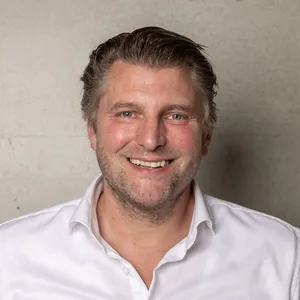
Robert Wreschniok is CEO of the TATIN Institute for Strategy Activation and developer of the 1% Method for strategy execution. For more than 20 years, he has been working on the question of how organisations translate their strategy into measurable action across hundreds of teams.
His approach integrates short, AI-supported team routines directly into existing regular team meetings: with an effort of around 1% of working time, first measurable data on strategy execution within four weeks, and the aim of achieving visible impact within 90 days.
Strategy execution should not be an additional change programme, but a continuous, measurable routine in teams’ everyday work: with the aim of creating more value while reducing unnecessary complexity.
Open profile as a separate page
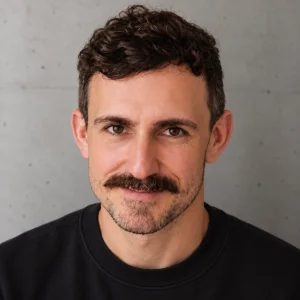
Tobias Dorfer is CTO of the TATIN Institute for Strategy Activation and part of the Management Team. He is responsible for the entire system landscape, the use of AI and the digital architecture. He ensures that strategy execution remains as technically simple for teams as it needs to be, while being as secure and robust as companies and works councils expect.
He is responsible for the digital platform Activation.Now, on which SPARKs run, from architecture and operations to further development. This includes making sure the platform fits into clients’ system landscapes: as a plug-in for Microsoft Teams, in each company’s corporate design, and connectable to existing systems such as Salesforce via interfaces.
He is also responsible for how AI is used at TATIN. His principle: AI should take work off teams’ shoulders, for example by clustering contributions into topics, not replace decisions. Data protection is part of the architecture, not an afterthought. Team members do not log in, contributions cannot be traced back to individuals, and only aggregated data is analysed.
Before joining the team permanently, he had already been active for many years on projects in the TATIN network and knows clients’ requirements from practice. His technical career began early: he wrote his first programs at a young age. Later, as a freelance software developer, he served international clients and spent several years as team lead at a digital agency. As a Zend Certified Engineer, he brings extensive experience in developing scalable, sustainable systems.
Open profile as a separate page
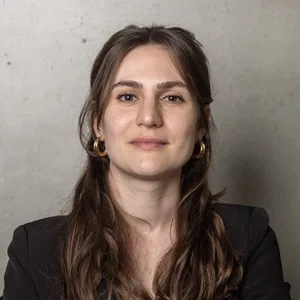
Nuria Behringer is CHRO of the TATIN Institute for Strategy Activation and part of the Management Team. As a business psychologist, she combines what strategy execution needs: a precise understanding of the social dynamics in teams and a solid data foundation that makes progress measurable.
For several years, she has been supporting TATIN’s corporate clients in sharpening and achieving their goals. Her experience: an organisation-wide strategic realignment only succeeds with a transformation strategy that fits the respective corporate culture.
As a university lecturer in change management, she puts people and social dynamics at the centre. At the same time, she ensures that data feeds into the activation process from the outset, so that successes become visible and manageable.
Previously, she worked in management development at a major automotive group and at a consultancy for HR and organisational development. She studied International Management in the USA and Germany, in German, English and Spanish.
Selected clients
Open profile as a separate page
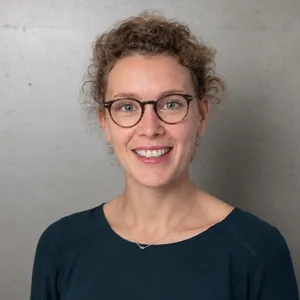
Lisa Kirberg is COO of the TATIN Institute for Strategy Activation and a member of the Management Team. She brings more than ten years of experience in leadership development and in accelerating strategy and transformation initiatives, most recently as CEO and Managing Director. What drives her: taking people with her through change, creating orientation and releasing energy.
At TATIN she makes sure that strategic ambitions turn into concrete results and that strategy is lived in the everyday work of teams and leaders, day after day.
At TATIN she supports teams and leaders in creating orientation and embedding strategy in their day-to-day work.
From 2021 to 2025 she was CEO of DAY7 GmbH, whose solutions support companies, public authorities and consultancies worldwide in strategy and transformation initiatives. Before that, she spent more than six years at the MLI Leadership Institut in Munich, progressing from Consultant to Managing Director. Her focus was on leadership programmes and on supporting companies through transformation. Earlier, the MBA graduate gained international project experience as a Project Officer at the Federation of Canadian Municipalities in Ottawa.
Selected clients
Open profile as a separate page

Christina Berg is Senior Associate Consultant at the TATIN Institute for Strategy Activation and an expert in strategy activation. She supports organisations through transformations. Her background in economics, consumer psychology and behavioural research helps her understand why people act differently in everyday life than planned, and how teams actually adopt new routines.
At TATIN she helps companies in industry, energy, automotive and media carry a new strategy into the everyday work of their teams, including during periods of major change such as an IPO.
Before becoming a consultant she worked for several years in various departments of a global chemicals group and gained experience at one of the world’s largest consultancies.
Selected clients
Open profile as a separate page

Verena Brinkmann is responsible for Quality Excellence and is part of the Management Team of the TATIN Institute for Strategy Activation. As a communications specialist, she has one central focus: conveying messages so that they resonate with the most diverse audiences and activate them to act. This is exactly where many strategies fail: they are right, but not tangible for the team.
As a consultant at communications agencies, she supported clients from a wide range of industries, nationally and internationally, with sustainable communication in print, online and live. Using simulations and process training, she also prepared her clients proactively for communication crises.
In the internal communications department of an industrial company, she developed concepts to activate employees and leaders for the company’s strategic goals. Today, she brings this experience to strategy activation.
Selected clients
Open profile as a separate page
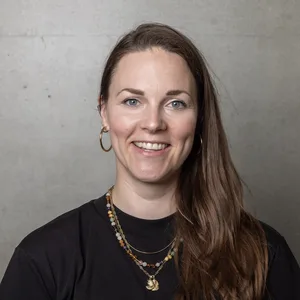
Julia Cvetnic is Consultant at the TATIN Institute for Strategy Activation and ensures that transformation and strategy activation projects run smoothly on an operational level. She makes complex content easy to understand and engages the various stakeholders of a project effectively.
At TATIN she manages the operational delivery of client projects, from the timeline to engaging the various stakeholders.
Her training as a retail management assistant and running her own branches gave her a solid business understanding and organisational rigour. Her work at FUNKE Mediengruppe and as a copywriter and PR manager sharpened her eye for target groups and clear messages.
Selected clients
Open profile as a separate page
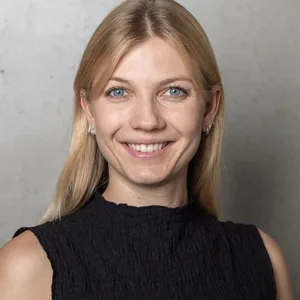
Laura Degenhardt is Senior Associate Consultant at the TATIN Institute for Strategy Activation and an expert in strategy activation and cultural change. Her focus is strategic communication in an international context: how strategies are understood across cultures and locations and take effect in teams’ everyday work.
At TATIN she helps international corporations embed strategies and leadership standards in their teams across countries and cultures.
Her focus is strategic communication in an international setting and communicating sustainable corporate strategies. She builds on her Master’s in International Public Relations from LMU Munich with a certificate in Intercultural Communications.
Selected clients
Open profile as a separate page

Duygu Yildiz is Consultant at the TATIN Institute for Strategy Activation and an expert in organisational psychology. She supports strategy activation and transformation processes with a focus on leadership, change dynamics and inclusive organisational development, exactly where it is decided whether a strategy reaches the teams.
At TATIN she supports clients in industry and reinsurance, with a focus on leadership and change dynamics in teams.
She gained practical experience in change management at Bosch, in projects on leadership and digitalisation. Her international background gives her a particular feel for intercultural collaboration.
She is a psychologist (M.Sc., University of Amsterdam, cum laude) specialising in consultancy and organisational development.
Selected clients
Open profile as a separate page

Pauline Kling-Urban is a Consultant at the TATIN Institute for Strategy Activation and combines research-based management expertise with hands-on strategy execution. Her focus is on translating strategic goals into concrete measures, making their impact measurable and embedding continuous improvement sustainably in the day-to-day work of teams.
At TATIN she supports international industrial companies in activating strategic priorities across business units and leadership levels, and in making their execution measurable through digital, data-driven approaches.
Before joining TATIN, she earned her doctorate in management at the University of Innsbruck, where she worked in research and teaching with a focus on strategy, corporate sustainability and ESG. Prior to that, as a Partner Relations Manager, she gained experience in strategic partner management and in working with a wide range of stakeholder groups.
Today she combines scientific, analytical thinking with practical implementation skills to support strategic change on a data-driven basis and make its impact measurable.
Selected clients
Open profile as a separate page
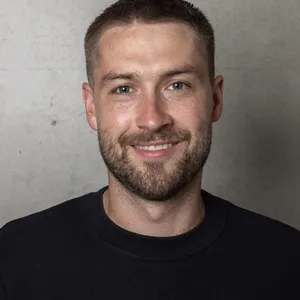
Michael Meier-Wallraf is Senior Associate Consultant at the TATIN Institute for Strategy Activation, focusing on strategy activation and digital transformation. He combines business know-how with the question of what opportunities and risks digitalisation brings for business models and processes, and how strategies can be effectively activated as a result.
At TATIN he supports clients from activating their strategy through to embedding it in digital processes. His focus is the digital transformation of existing business models and processes and the development and activation of effective strategies.
His business grounding comes from a degree in Business Administration and a Master’s in Business Consulting & Digital Management (M.Sc.).
Selected clients
Open profile as a separate page

Regina Ruppel is Consultant at the TATIN Institute for Strategy Activation and an expert in systemic organisational development. She supports companies in strategic change initiatives. Her attention is on what often invisibly slows down strategy execution: the dynamics between people, teams and departments.
As a psychologist (M.Sc.) with training as a systemic-integral consultant, she combines psychological expertise with a deep understanding of social and organisational dynamics. Her focus is on the holistic development of organisations, taking different perspectives into account.
Before that, she spent several years at a marketing agency, where alongside client projects she also shaped internal change and development processes. Today she draws on this experience to guide strategic change in a way that is practical, easy to connect with and sustainable.
Selected clients
Open profile as a separate page

Luisa Vera is a Senior Consultant at the TATIN Institute for Strategy Activation and an expert in strategy activation and cultural change. She focuses on a question on which every strategy execution depends: what moves people to embrace change?
At TATIN she supports corporations in building technology, energy and insurance with strategy activation and cultural change.
Her passion for corporate transformation and leadership development began as a working student at a Munich consultancy. Working and studying in France, Spain and Mexico gave her strong intercultural skills.
Selected clients
Open profile as a separate page

Raluca Uioreanu heads Accounting at the TATIN Institute for Strategy Activation and is responsible for the institute's financial management. With her eye for figures, reporting and reliable processes, she frees up the team to focus on working with clients.
She studied Business Administration in Cluj, Romania, and moved to Munich in 2001, where she first worked at the European Patent Office.
Most recently, she worked at Mercateo AG, one of Europe's leading procurement platforms for business customers, where she was responsible for office organisation, reporting and statistical analysis.
Her interest in corporate strategy and strategy activation led her to the TATIN Institute.
Open profile as a separate page

Julia Schneider heads the design team at the TATIN Institute. She began her career as a graphic designer at agencies in Cologne, Berlin and Marseille. From 2008 she worked freelance for 15 years, with clients including Triumph and Emanate, the subsidiary agency of Ketchum Pleon.
She has been part of the TATIN Institute since its beginnings – first as a freelancer and, since 2023, as a permanent member of staff. Today she brings her many years of experience and creative expertise to the design and further development of the institute.
Open profile as a separate page

Member of the Advisory Board of the TATIN Institute for Strategy Activation
Nina von Leffers is a professor at the University of Applied Sciences Regensburg, specialising in strategy, marketing and sales. She has 15 years of consulting experience, mainly in the automotive and mechanical engineering industries.
She is an expert in customer-centric processes and has extensive expertise in market entry and growth strategies. Her current areas of interest are future mobility concepts, white-label strategies and their implications for autonomous driving across different industries.
Previously, she spent 4 years at McKinsey working on a range of projects, mainly in Europe and China. A business economist by training, she earned her doctorate in marketing. She studied at the University of Münster, the University of Illinois and Shandong University.
Open profile as a separate page

Member of the Advisory Board of the TATIN Institute for Strategy Activation
Coworking means working together across departments, functions and even companies. It is about qualification rather than hierarchy, and Madeleine von Mohl is convinced of this. As founder and CEO of betahaus, Europe's largest coworking space with locations in Berlin, Hamburg, Sofia and Barcelona, Madeleine von Mohl is an expert in building leadership coalitions that cut across hierarchies and departments. Since 2009 she has organised the betapitch start-up call, now held in eight European cities. While studying history, she was involved in Politikfabrik, a student agency for political communication known for the Wahl-O-Mat.
Open profile as a separate page

Member of the Advisory Board of the TATIN Institute for Strategy Activation
Patrizia Nanz is Scientific Director at the Institute for Advanced Sustainability Studies (IASS) in Potsdam, Professor of Transformative Sustainability Science at the University of Potsdam and head of the European Institute for Public Participation (EIPP). Her research interests include ecological and social sustainability, the future of democracy and democratic participation, and the relationship between science and democracy. She studied philosophy and history in Munich, Frankfurt am Main and Montreal and completed her doctorate at the European University Institute in Florence.
Before joining the IASS, she conducted research at institutions including the Max Planck Institute for Research on Collective Goods in Bonn, the Centre for the Study of Democracy at the University of Westminster (London) and the Institute for Advanced Study in the Humanities in Essen (KWI). From 2002 she held a professorship in political theory at the University of Bremen. She has held visiting fellowships at the Wissenschaftskolleg zu Berlin and the Massachusetts Institute of Technology (MIT) in Cambridge, MA. She advises the German Federal Government as co-chair of the Science Platform Sustainability 2030 and as a member of the “Hightech-Forum”. Her numerous publications include a new edition of “Die Konsultative. Mehr Demokratie durch Bürgerbeteiligung”, co-authored with Claus Leggewie and published by Verlag Klaus Wagenbach.
Open profile as a separate page

Member of the Advisory Board of the TATIN Institute for Strategy Activation
Thomas Perry works in research-driven consulting for companies and institutions on innovation, target groups, marketing and strategy. He began at polis GmbH in Munich in political and social research, advising clients on election campaigns and other campaigns. From 1995 he built up the research competence centre at Kohtes Klewes (now Ketchum) and headed PR planning and PR evaluation.
From 1998 to 2009 he was a Director at Sinus Sociovision in Heidelberg, responsible for clients from institutions and companies across a wide range of industries, before co-founding Q Agentur für Forschung GmbH with partners in 2008, where he built up the company and served as managing partner until 2023.
Open profile as a separate page

Member of the Advisory Board of the TATIN Institute for Strategy Activation
Nicola Pizzoni is active as a founder, advisor and COO at several companies. He is involved in developing strategies and supports companies with national and international market roll-out and with building their operations. He also contributes his expertise to transactions and company financing.
After starting out at BDO Wirtschaftsprüfungsgesellschaft, he joined Ketchum Germany as COO in 1996. In 2006 he founded pizzoni advisors, a management consulting boutique specialising in leading complex negotiations. From 2009 he was responsible, as COO, for building up Exb Labs, developer of an AI platform technology.
Open profile as a separate page
Insight · MethodologyAn article by Robert Wreschniok, CEO of the TATIN Institute for Strategy Activation
We spend months perfecting the town hall and then wonder why, three months later, the strategy has vanished from the teams.
Classic strategy roll-outs built on town halls, cascades and workshops try to change behaviour through understanding. With SPARKs, the TATIN Institute for Strategy Activation takes the opposite route: in their existing team meeting, teams regularly solve a real problem in a way that pays into a strategic goal, and experience first-hand that their own actions make a difference. First the work changes, then the mindset.
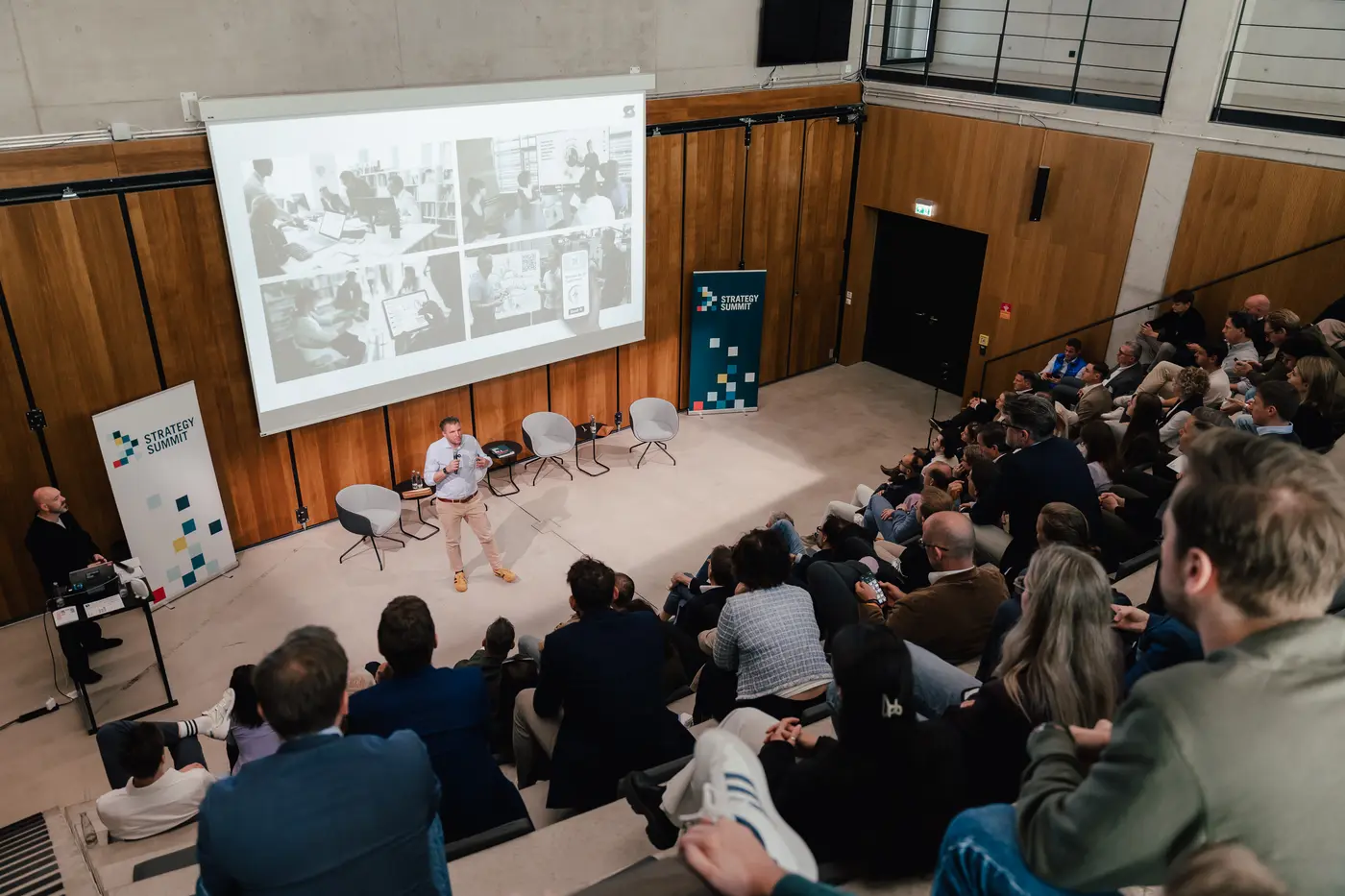
Not out of ill will. Whatever is on the desk today almost always beats whatever will matter at some point.
We all know the usual response: we want people to behave differently in their day-to-day work, so we take them out of their day-to-day work. Five hours of workshop on the strategy, then back to the same desk. From now on, please act strategically.
I would be lying if I claimed I had never tried this myself. For years I kept perfecting this process. Until, around seven years ago, I decided on a radical change of system.
The mistake lies in the approach. We try to change behaviour through understanding. It works the other way round. Experiencing even once that your own actions make a difference is a thousand times more powerful than any discussion about it.
So strategy has to happen where the work happens. In the regular team meeting, the team takes a real issue from its own desk and asks: how do we solve this so that it pays into our strategic goal? One small step until next time, then a joint look at what has changed. Around 20 minutes, regularly, in the existing team meeting.
That way nobody has to know the strategy by heart, because the team experiences it in its own work.
The TATIN Institute for Strategy Activation calls this routine a SPARK. A SPARK always follows the same pattern and needs neither a workshop nor an extra meeting.
Source: TATIN Impact Data. Measured via the built-in impact check and usage data from the SPARKs platform in our own client projects, without any additional survey.
Every action a team decides on in a SPARK gets an owner and a due date. In the next SPARK the team assesses whether it was implemented and whether it worked. This impact check and the platform usage data, i.e. topics worked on, actions decided and actions implemented, are evaluated only in aggregate across at least five leaders. The figures come from our own client projects and are not an independent benchmark.
First the work changes, then the mindset.
InsightNot another change programme. We change everyday work itself.
A SPARK is a structured team routine of around 20 minutes, developed by the TATIN Institute for Strategy Activation. In its regular team meeting, a team works on a real, everyday issue, aligns it with the strategic goals and agrees on a concrete action with an owner and a deadline. This is how strategy gets executed in day-to-day business, without additional workshops.
A SPARK is a short, structured team routine of around 20 minutes. It runs in meetings that take place anyway, works on the team's real issues and ends with a real decision.
An example: “What is currently blocking our collaboration and putting our project goals at risk?”
Workshops take place outside everyday work, and their impact fades as soon as daily routine returns. Employee surveys identify problems but do not solve them. SPARKs start where the work happens: the team names a problem, decides and acts in the same session. All data is generated as part of the process, with no additional survey effort.
Source: TATIN Impact Data. Measured via the built-in impact check and usage data from the SPARKs platform in our own client projects, without any additional survey.
Every action a team decides on in a SPARK gets an owner and a due date. In the next SPARK the team assesses whether it was implemented and whether it worked. This impact check and the platform usage data, i.e. topics worked on, actions decided and actions implemented, are evaluated only in aggregate across at least five leaders. The figures come from our own client projects and are not an independent benchmark.
SPARKs turn everyday teamwork into focused execution, with clear ownership and reliable follow-up.
Insight · AwardA moment we are proud of: our work with E.ON Italia was featured as a best-practice case in the Stanford Social Innovation Review.
In 2025, the Stanford Social Innovation Review published the transformation of E.ON Italia as a best-practice case. The TATIN Institute for Strategy Activation supported the company in activating its strategy all the way into its teams.
The article tells how a bold purpose, a jointly developed strategy and energy from the heart of the organisation can drive real transformation from the inside out. We had the privilege of accompanying Frank Meyer and his team at E.ON Italia on this journey, and it is impressive how far they have come.
In the article, our approach is still called “Tiny Interventions”: short, recurring impulses directly in the teams’ everyday work. Today’s SPARKs grew out of them.
E.ON Italia achieved these results. Our contribution: management was able to make sure that all teams regularly worked on the topics it considered central. That is how you lead through SPARKs.
Change rarely starts with a perfect plan. But it often starts with people: committed, curious, courageous. We are grateful to have been part of it.
Read the article InsightEBIT is one of the most important metrics for executive boards. And one of the most abstract for teams.
A single team can influence EBIT through two levers: creating more value for internal or external customers and reducing unnecessary complexity. With SPARKs, this regularly becomes a concrete action in every team, with an owner and with its impact tracked.
An executive board has many ways to influence EBIT: changing the portfolio, adjusting prices, introducing a new target operating model, consolidating sites, investing, automating. But which of these can a single team really influence on a Monday morning?
At team level, EBIT becomes surprisingly tangible. Within a team's direct sphere of influence, there are essentially two levers.
This means practically every team can contribute. Not through a big EBIT programme, but through small, concrete improvements within its own sphere of influence, month after month. When an idea becomes an action, someone takes ownership and it is later checked whether it really made a difference, many small improvements add up to measurable progress.
In addition, patterns across all teams become visible. When 70 teams independently name the same approval loop as a problem and describe their workaround, it is no longer a team problem. It is management information.
Source: TATIN Impact Data. Measured via the built-in impact check and usage data from the SPARKs platform in our own client projects, without any additional survey.
Every action a team decides on in a SPARK gets an owner and a due date. In the next SPARK the team assesses whether it was implemented and whether it worked. This impact check and the platform usage data, i.e. topics worked on, actions decided and actions implemented, are evaluated only in aggregate across at least five leaders. The figures come from our own client projects and are not an independent benchmark.
That is why it pays not only to steer EBIT from the top down, but also to improve it from the bottom up. More value. Less complexity. In every team. Continuously.
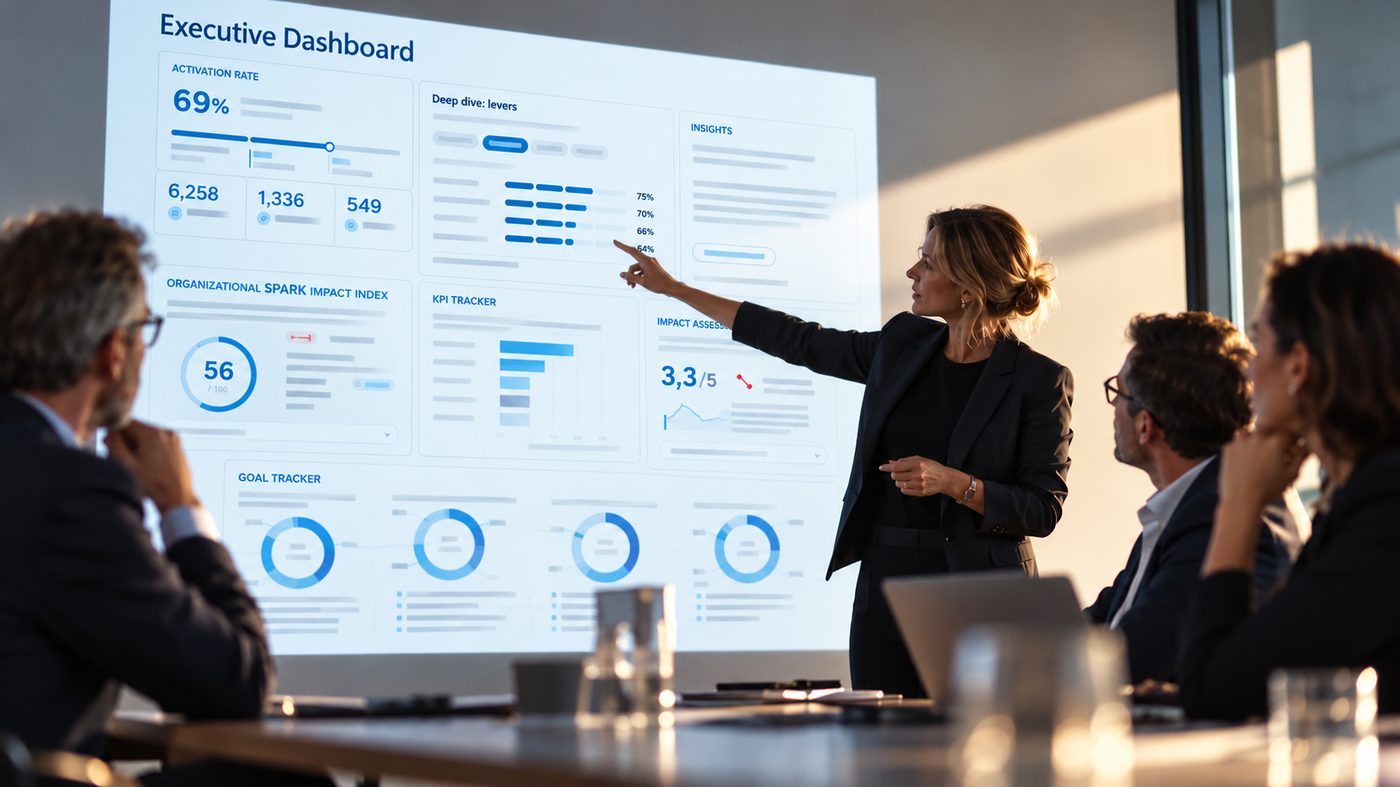
Insight · Executive DashboardEvery SPARK delivers insights straight from the teams’ work. From week 4 you can see where execution is holding up and where it is stalling.
The TATIN Institute’s Executive Dashboard gives senior management an aggregated view of where strategy execution in the teams is holding up and where it is stalling. The data comes from the actual use of SPARKs, without any additional survey. Individual teams and people are never visible.
Source: TATIN Impact Data. Measured via the built-in impact check and usage data from the SPARKs platform in our own client projects, without any additional survey.
Every action a team decides on in a SPARK gets an owner and a due date. In the next SPARK the team assesses whether it was implemented and whether it worked. This impact check and the platform usage data, i.e. topics worked on, actions decided and actions implemented, are evaluated only in aggregate across at least five leaders. The figures come from our own client projects and are not an independent benchmark.
Every leader sees whether their team’s work really contributes to the strategy or just keeps people busy: team impact, goal focus, capacity gained and which routines are actually practised. This dashboard is visible only to the leader themselves.
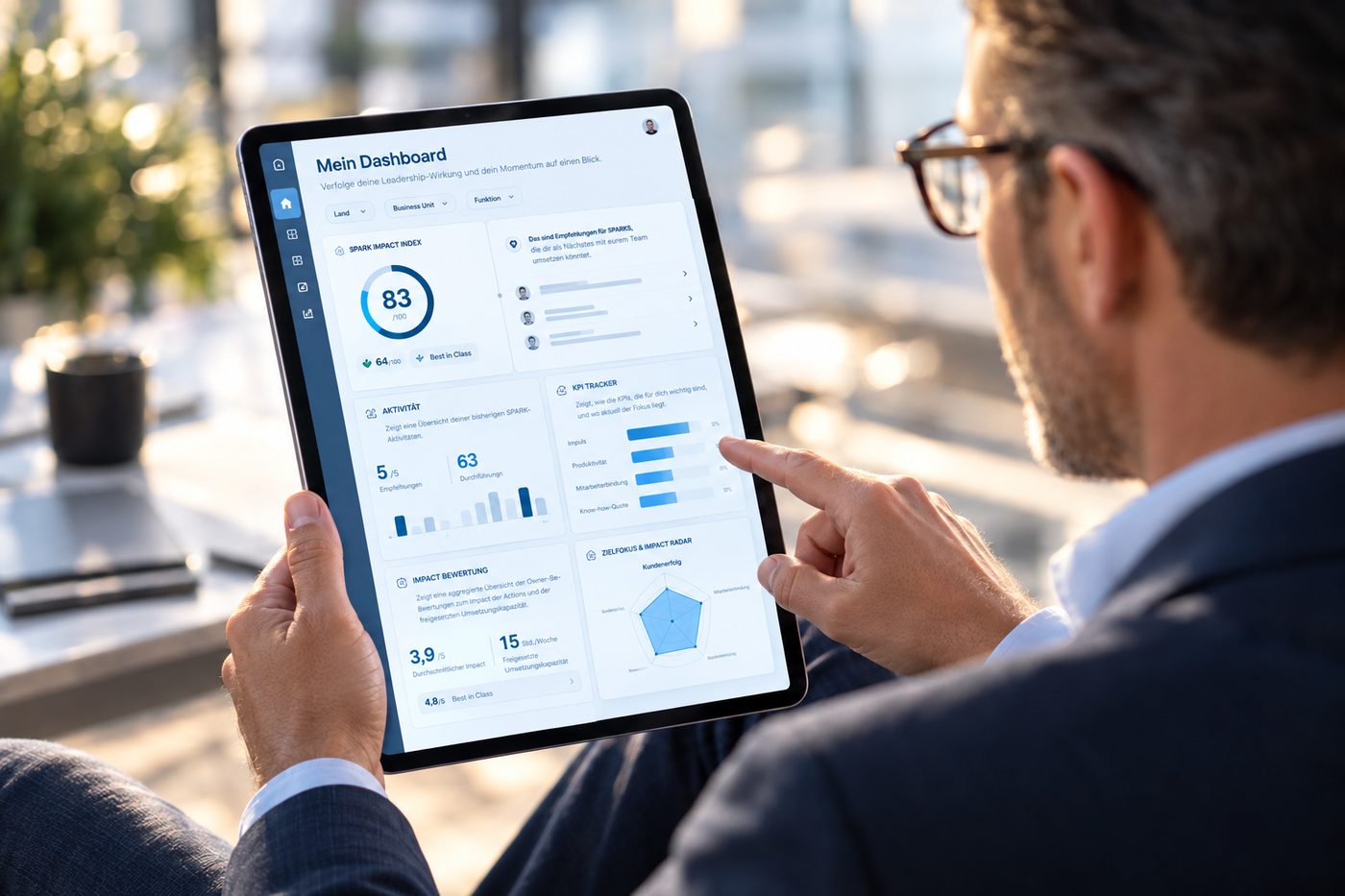
Anonymous by design: names never appear in the dashboard. This is not surveillance but leadership intelligence.
InsightYes. All seven.
The seven deadly sins get people moving, often in the wrong direction. The TATIN Institute deliberately harnesses this energy: each deadly sin becomes the starting point for a SPARK question that channels ambition, frustration or complacency into focus, learning and concrete execution.
Perhaps they are not the problem at all. The seven deadly sins are so tempting that they get people moving, unfortunately often in the wrong direction. But could there also be an opportunity in that? If we channel the same energy in the right direction.
Because too many priorities at once dissolve focus. Studies on open strategy show that roughly half to two thirds of leaders cannot correctly name their company’s strategic priorities. Around 70% consider involvement in strategy crucial for commitment and execution.
Source: studies on open strategy
The 7 deadly sins get people moving. We simply give that movement a different direction. SPARKs: energy in the right direction.
White paper · The SPARKs MethodYour strategy is good. What is missing is the mechanism that embeds it in your teams’ everyday work.
The SPARKs Method of the TATIN Institute for Strategy Activation embeds an existing strategy in the everyday work of teams: with short impulses of around 20 minutes in meetings that take place anyway, typically every two weeks. The white paper explains why good strategies fail in everyday work, what the execution gap costs and how the mechanism works.
The kick-off went well, the feedback was positive. Then everyday business reclaims attention: full calendars, urgent topics, the same priority conflicts. This is no isolated case and rarely a communication problem. What is missing is a mechanism that translates the strategy into team decisions week after week.
Sources as cited in the white paper: Harvard Business Review (2017), Ernst & Young (2019), Sull, Sull & Yoder (2018), Bain & Company (2024).
The costs rarely show up as one big slump. They accrue quietly, week after week:
Without deliberate refocusing, strategic attention declines steadily, because attention without structure follows the urgent, not the important. With regular refocusing it stays stable. SPARKs are this rhythm: not an external push but a heartbeat that runs reliably, whatever else is going on.
Recurring patterns become visible across all teams, anonymously and in aggregate. Management sees whether the strategy reaches everyday work. In 2025 the Stanford Social Innovation Review featured this approach as best practice, using E.ON Italia as the example.
The SPARKs Method rests on four behavioural dimensions of high-performing teams, based on Google’s Project Aristotle study:
The strategy is in place. Now it has to take effect.
Request the white paper About the imageThe photo shows Margaret Hamilton in 1969 next to the printed program listings of the Apollo on-board software that she developed with her team at MIT.
Hamilton led the development of the software for the navigation and guidance computers of the Apollo missions. Shortly before the first Moon landing, the on-board computer raised overload alarms. Because her software was built to set aside the unimportant and keep the important running under pressure, the landing could go ahead. Hamilton later coined the term software engineering and was awarded the Presidential Medal of Freedom in 2016.
The strategy could hardly have been clearer: land people on the Moon. But success was decided on the last mile, in countless details that a team carefully executed day after day. That is exactly where we work.
There is one story we particularly like to tell. During a visit to the lab, Hamilton's young daughter crashed the simulator by launching the wrong program in the middle of a simulated flight. Hamilton wanted to build in a safeguard and was told that astronauts would never do such a thing. On the Apollo 8 mission, exactly that happened. People who are close to the work often see risks first. What matters is whether anyone listens.
For us, this is the core of strategy activation: a clear direction, focus on what matters when things get tight, and an organisation that listens to the people who do the work.
The software pioneer Margaret Hamilton passed away on 30 September 2026.
Perspective · Team leaders and team members“I don’t need another item on my desk. I need a clear desk.”
A SPARK is a team routine of around 20 minutes within the existing regular team meeting, developed by the TATIN Institute for Strategy Activation. Every perspective in the team is heard, and the team decides on a concrete step with an owner, a binding timeline and an impact check. The meeting gets shorter, and alignment with the strategy happens along the way.
A regular team meeting lasts 60 minutes on average. A single problem or the next steps can easily take up 40 minutes of that, because everyone speaks one after the other. In a SPARK, everyone writes down their view at the same time for three minutes, the contributions are clustered automatically, the team sets the focus and decides who owns the next step. That is 20 out of 60 minutes, so around 30% saved. And because a decision has been made, the follow-up meeting is no longer needed.
Every solution contributes to the company strategy. Your contribution becomes visible.
Perspective · Board and PMOYou see where your strategy lands and where it quietly seeps away.
With SPARKs, the TATIN Institute for Strategy Activation translates a company’s strategic priorities into short team routines within the existing regular team meeting. There, each team solves a real operational issue in a way that contributes to the strategy. From week 4, the board and PMO see in the Executive Dashboard where execution is holding up and where it is stalling, aggregated and anonymous.
Your leaders work on their most pressing operational issues, in sales, HR or controlling. Every solution contributes to your strategic priorities. This way, the strategy is executed through day-to-day business instead of competing with it for attention.
The AI is a tool, not a decision-maker. It makes visible what people are thinking within a team and across many teams. What follows from that is decided by people.
Contributions are anonymous. Names only appear where an action is given an owner, and only within the team itself. Analysis is exclusively aggregated across at least five leaders, at department or division level, never for individual teams. Precisely because nobody is being monitored, the data is honest. On request, we will present the system to your works council before the project starts.
Steering from the top and improvement from below combine for maximum impact.
One mechanism, two perspectives.
You see where your strategy lands and where it quietly seeps away.
Your leaders work on their most pressing operational issues, in sales, HR or controlling. Every solution contributes to your strategic priorities. This way, the strategy is executed through day-to-day business instead of competing with it for attention.
From week 4
Two priorities compete for the same resources in many teams.
Sharpen, postpone or drop a priority.
Alignment loops and approvals pile up at one interface.
Clarify responsibilities and shorten approval paths.
One division is falling behind the others in execution.
Provide targeted support before it shows up in the KPIs.
are translated into SPARK questions
around 20 minutes in the regular team meeting, every two weeks
within their own sphere of influence, followed up
what keeps slowing things down becomes visible
aggregated from five leaders, live from week 4
Every team regularly makes a concrete decision in line with your priorities.
Priority conflicts, friction at interfaces and overload become visible before they show up in the KPIs.
All teams, all sites, in person, online and hybrid. No trainers or offsites.
Actions are followed up until there is a result. You do not need a separate evaluation.
Three phases with clearly defined packages at a fixed fee. After each phase you decide on the next step based on measured impact.
Anonymous by design. No assessment of individuals.
What boards ask us first
We work in three phases: a pilot with tailored SPARKs and ten teams over around four months, then scaling to one division or a selected location over around six months, and finally the entire organisation over around twelve months. Billing is modular by phase, with clearly defined packages at a fixed price. As a guide: the investment is around nine and a half consulting days per month. It decreases in the following phases. And we promise you: prices always remain transparent and reliably predictable.
Very little extra, because SPARKs run in meetings that take place anyway. Internally, you need one accountable function, such as strategy, transformation or HR. In the build phase, plan for around 20 hours a month there. In the run phase we meet for one hour a week, because we accompany the process and do not leave you on your own. We and the platform take care of preparation, documentation and follow-up.
At the start, we simply make sure your initiatives really reach the teams, in existing meetings that get shorter as a result. Once the routine is established, you build directly on new behaviour and can significantly reduce the number of initiatives in your organisation.
Your teams achieve the results. SPARKs enable the board and divisional management to make sure that all teams regularly work on the topics they consider central. That is how you lead through SPARKs.
Then you know in week 4 rather than in the annual report. SPARKs show not only where teams are stuck but also where priorities are unclear or contradict each other. That is exactly the information you need to adjust course in time.
Both are built in from the start. Team members do not log in, names appear neither in METIS nor in the dashboard, and analysis is only aggregated across at least five leaders. On request, we will present the system to your works council before the project starts.
With our method, your leaders take charge from day one. Responsibility is and remains where it belongs. Each team builds its own library of SPARKs, and METIS makes proven solutions available to all teams.
Turn strategy into action
“I don’t need another item on my desk. I need a clear desk.” Achieve more by doing less: you work on what is already on your desk. Alignment with the strategy happens along the way.
No new meeting. The SPARK is part of your regular team meeting and makes it shorter: one issue takes around 20 instead of 40 minutes, and the follow-up meeting is no longer needed.
Everyone writes at the same time and anonymously, the quiet ones too. The team jointly chooses the most important issue and decides on a step with an owner, a binding timeline and an impact check.
You see what your actions achieve and how your team contributes to the company goals. Nobody else sees your team; analysis is only aggregated from five leaders upwards.
What team leaders ask us first
No. The SPARK runs in your regular team meeting, around 20 minutes, typically every two weeks. It makes your meeting shorter, not longer.
None. You share your screen and the team scans a QR code with their smartphones. No app, no login. The SPARK guides you through the process, and documentation and follow-up run automatically.
No. Contributions are anonymous, only you see your dashboard, and analysis is only aggregated across at least five leaders. Names only appear when someone takes on an action, and only within the team itself.
Your team chooses the issue that matters most right now. The SPARKs are tailored to your priorities and can be repeated, each one building on what the team said last time.
Shorter meetings with real decisions, clear ownership in the team and visible impact of your work. And backing: when three things are urgent at once, the team decides together what comes first.
All details for leaders: the process in the meeting, dashboard, examples from everyday work
Between a clear goal and changed behaviour there is always the same last mile: the everyday work of your teams. That is exactly where we turn goals into action. We set up SPARKs with you around your priorities, your teams work with them in their regular meetings, and you steer via the dashboard.
Without safeguards, the last mile breaks off: teams get stuck in day-to-day business.With SPARKs, the last mile is closed: all teams execute, measurably.
Which goal are you pursuing?
You have the strategy. Now everyone needs to understand it and act on it?
With SPARKs and the Big Picture Method we make sure of it.
Your strategy is clear?
With SPARKs we make sure it is followed through, measurably, in every team.
Your employee survey results are on the table?
With SPARKs we make sure your teams actively work on improvement.
New capabilities such as AI skills will decide your future?
With SPARKs we make sure they move from the seminar room into the line and into action.
Your 360° feedback gives every leader transparency and direction?
With SPARKs, those insights become tangible improvement in the teams.
You have other goals you are determined to reach?
Talk to us. Together we will find out whether SPARKs can be part of the solution.
Your goalTalk to usAlready working with a strategy consultancy or other partners? We complement each of these initiatives seamlessly on the last mile.
You decide that yourself before the first team starts. We develop every SPARK with you, tailored to your priorities and your company. No team is handed anything you do not stand behind.
In the vast majority of cases, yes, because the routine takes work off leaders’ plates and makes meetings shorter. Some will not take part, just as not everyone uses a satnav. You see this at division level and can provide targeted support.
The levers of a bank are different from those of an energy provider. That is why we rely on solutions tailored to your industry and your goals.

Carried the shared strategic direction after a global acquisition down to team level in 36 markets and 18 languages, including two Mandarin variants, and secured its execution.
Integration with full innovative power, across markets, languages and teams
Of course, many people stand behind these successes. They are the result of a smart strategy, often developed together with strong consulting partners, and of determined management that chose to unlock the full potential at team level. We are part of the solution, no more and no less.
Together we close the gap between decision and action and make sure that good strategies, transformation programmes and concepts are truly lived in the teams’ day-to-day work. Visibly at your side or in the background under your brand.
This is where strategies, transformations and strong concepts are created.
This is where we, as your partner, make sure strategies turn into measurable action.
Whether strategy, transformation, change or leadership programme: what you develop with your client remains yours. We replace none of it and offer your client no alternative to your work. We are always the follow-on partner who secures the last mile: execution in the teams.
Analysis, strategy development, target picture and alignment with the executive and supervisory boards.
Every team translates the strategy into its own contribution and regularly aligns its work with it, meeting by meeting.
Programme architecture, roadmap, programme management and PMO.
The programme goals reach the teams’ meetings, and roadblocks become visible long before they show up in the status report.
Change architecture, stakeholder management, communication and change formats.
The intended change becomes new behaviour in the teams’ day-to-day work and stays that way after the programme ends.
Design, delivery, analysis and the debriefings with the leaders.
We translate the results into concrete agreements with the teams and make sure leadership behaviour changes noticeably in everyday work, right up to the next feedback round.
Questionnaire, delivery, analysis and presentation of the results.
We make sure every team works on its own results, implements measures itself and makes progress visible, instead of the report ending up in a drawer.
Curriculum, trainings, formats and trainers.
We anchor what has been learned in the meetings that take place anyway, so new capabilities take effect in the teams’ everyday work and don’t stay in the seminar room.
Our ground rule: What you have set up remains yours. We start where your programme ends and secure execution in the teams.
Strategy
Transformation
Leadership
Culture
Employee survey
Together we develop the best way to anchor your concepts sustainably in everyday work and create impact.
Joint client meetings, joint project steering and a visible execution partnership.
We work in the background under your brand. Your client relationship always comes first.
Activate leaders
Get teams into dialogue
Anchor action in everyday work
Make impact visible
Joint executive reviews
You decide how we work together: alongside your team or entirely on a white-label basis. Always with the same goal: to secure the execution of your concepts sustainably.
Globally positioned strategy and transformation consultancies.
Strategy, HR and organisational consultancies in your region.
Independent consultants, coaches and small, focused specialists.
We work with consultancies of every size and specialisation, always with the aim of strengthening execution and securing lasting impact.
Your strategies unfold their full power in the teams’ everyday work.
We don’t develop strategies and we don’t replace programmes. We secure their execution in the teams.
We create routines that change behaviour for good.
Shorter meetings, more focus and more time for what matters.
Ongoing strategy activation becomes part of your offering.
Find out how, as a partner at your side, we can secure the execution of your transformation projects for the long term.